A Standing Terrace or Seated Stand: Two Ways to Shape a View
Compare a standing terrace and seated stand by tracing sightlines, movement, and gathering, so you can read how each ground shapes a spectator’s view.
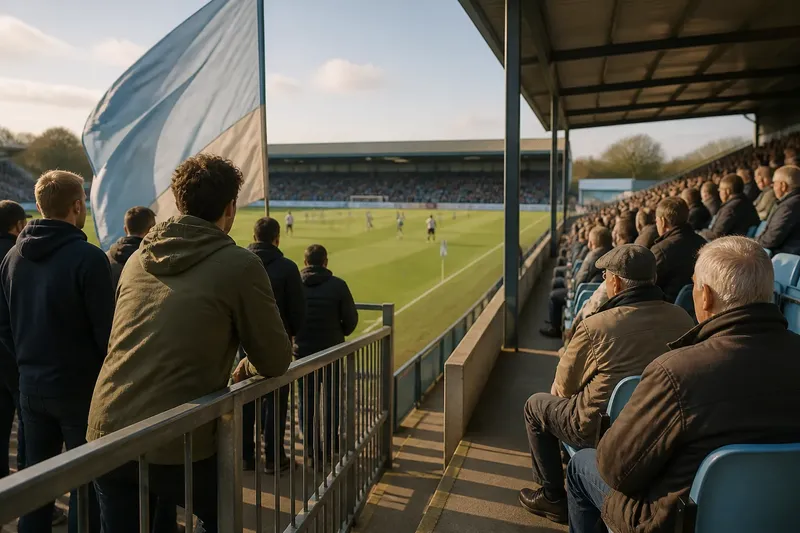
At a ground, one spectator leans forward while another shifts sideways to see past a flag. A standing terrace and a seated stand can frame the same match in strikingly different ways. To compare them, begin with the view each offers, then follow how people move and gather around it.
This is a way to read a ground as a designed space, not to rank one arrangement above the other. The useful question is how its geometry and shared habits shape what a spectator can see and do. A terrace behaves a little like a crowded kitchen: people make room by adjusting their positions. A seated stand is closer to a row of desks: each place is more clearly assigned, though the view still depends on what lies in front.
Start with the shape of the viewing area
First, identify the area you are comparing. A standing terrace is a spectator zone without individual seats, often arranged on a slope or in stepped sections. A seated stand has rows of individual seats, typically with aisles, barriers, and a more fixed route through the section. Grounds may combine both types, so compare particular sections rather than assuming the whole venue works one way.
Look from the entrance toward the field. Notice the angle of the slope, the height of each row or step, and the distance from the nearest part of play. These features affect how much of the field is visible between spectators. A steep section can make it easier to look down toward the action, while a shallow one may leave the view more exposed to people ahead.
Then scan across the section. Check whether posts, railings, roof supports, screens, or flags interrupt the view. Notice whether the playing area appears level from side to side or whether the section’s position makes one end look compressed. A ground’s visual experience comes from the relationship between spectator and field, not simply from whether the spectator is standing or sitting.
Trace a sightline through the crowd
Choose a point on the field, such as a corner, a goal, or the center of play. Imagine looking at that point from several places in the section. From a seat, the spectator has a defined location and a fairly consistent eye level. The people in the row ahead also have defined places, but their posture can change: someone may rise to react or lean to follow the action.
On a terrace, each person’s position is less fixed. Spectators can adjust their stance, angle their shoulders, or move within the space. That flexibility may help someone find a view around a person in front. It can also make the sightline change as people gather more tightly or lift their arms. A clear view at one moment does not necessarily remain clear during a loud passage of play.
Look for the sightline’s weak points, not only its best view. A barrier may cut across the lower field from a particular position. A roof support may block a narrow slice of the action. In a seated stand, the obstruction can be tied to a specific seat or row. In a standing area, the same obstruction may affect people differently as they shift sideways or change their distance from the rail.
Follow how spectators enter and move
Next, trace the route from the concourse or entrance to the viewing position. In a seated stand, row and seat numbers organize the final part of the journey. Aisles divide the section into lanes, and spectators usually move along those routes before settling into assigned places. Once a row fills, passing through it may require people to stand or make room.
On a terrace, spectators generally choose a place within the available area rather than an individual seat. Movement can continue after people arrive as they make space for companions, shift to improve a view, or move toward an exit. Rails and barriers can help define the section, but they also shape where people can stop and how crowd movement divides.
Imagine a group arriving after the section has begun to fill. In a seated stand, they check their tickets, follow the aisle, and ask people in the row to make room for the assigned seats. The visible result is a short passage of movement concentrated around those places. In a standing terrace, they scan for an open patch and move together into it; the expected visible result is a small cluster that may shift as other spectators arrive.
Neither pattern makes movement disappear. Instead, each gives it a different shape. Seats concentrate arrivals along aisles and within rows. Terraces allow more local repositioning, while barriers and crowd density can narrow the routes people use. Reading these paths helps explain why the same entrance or pause in play may produce different kinds of motion in different sections.
Notice where people gather and how a section responds
A terrace can make a crowd appear as one broad surface. People stand close, turn together, and respond in ways that spread across nearby spectators. The section’s shared rhythm is visible in changes of posture: heads turn, arms lift, and attention shifts across the field. The group may gather around a familiar point, such as a rail or a central route, but the exact shape of that gathering can change during the event.
Seats create a more visibly divided crowd. Rows and aisles break the section into smaller units, even when spectators respond at once. A person can stand in place without leaving a seat, and a shared reaction can travel along a row or across several blocks. The seating grid makes individual locations easier to recognize, while the crowd’s collective movement remains apparent.
Look also at what happens between moments of action. A seated section may settle into place, with movement concentrated around entrances, concessions, and the intervals between play. A terrace may retain more visible shifting within the viewing area. These are tendencies, not rules: the shape of the event, crowd habits, and the layout of a particular ground all influence the rhythm.
Compare the trade-offs before choosing a viewpoint
Use the same questions for both areas rather than judging them by atmosphere alone:
- Field coverage: Can you see the near side, far side, and important corners from the section?
- Obstructions: Do rails, posts, screens, flags, or people in front interrupt the view?
- Position: Is your place assigned, or will you choose where to stand within the area?
- Movement: How do spectators reach the section, pass others, and leave?
- Gathering: Does the layout emphasize individual places, small groups, or a continuous crowd?
- Posture: Will the view remain usable if nearby spectators stand or shift?
For a spectator who values a predictable location, a numbered seat can make the choice simpler. Someone who wants to move within the section may prefer the flexibility of a standing area, if its layout and conditions suit them. Neither preference settles the sightline question; the section’s position, slope, obstructions, and surrounding crowd still matter.
Access needs also belong in the comparison. A route that looks direct on a plan may involve stairs, narrow aisles, or a long walk through a busy concourse. Check the venue’s access information for the relevant section and facilities, and contact the venue if a specific arrangement matters. Where seating, standing, or entry conditions depend on a venue’s rules, follow its published guidance.
What should you look for before choosing a section?
Is a standing terrace always a better view?
No. A terrace may let spectators adjust their position, but nearby people and fixed obstructions can still block the field. The angle and height of the section matter as much as its standing format.
Does a seated stand keep the view clear?
Not by itself. A seat gives you a defined place, but the person in front may stand, and a post or screen may interrupt the sightline. Check the view from the specific row or seat when the venue provides a reliable view guide.
How can I compare crowd movement?
Study the entrances, aisles, rails, and routes to the concourse, then notice where spectators pause or bunch together. The layout shows where movement is directed, while an event can change how busy those routes become.
Which area suits a group better?
Assigned seats make it easier for a group to know where each person belongs, although seats may not be together. A standing area lets people choose a shared patch when space allows, but their positions can shift as the section fills.
Read the ground as part of the match
Before deciding, compare a terrace and a seated stand from the same point on the field and follow each section’s routes from entrance to viewing position. Notice not just what is visible, but how the crowd’s arrangement changes the view during movement and collective reaction. For a standing terrace or seated stand, that distinction is the practical clue: one organizes spectators mainly through shared space, the other through assigned places, and both turn the same field into a different experience of watching.