The Myth That Every Team Has One Pre-Game Ritual
Team pre-game rituals can be shared, personal, improvised, or absent. Learn how each approach shapes belonging and how to recognize what fits a squad.
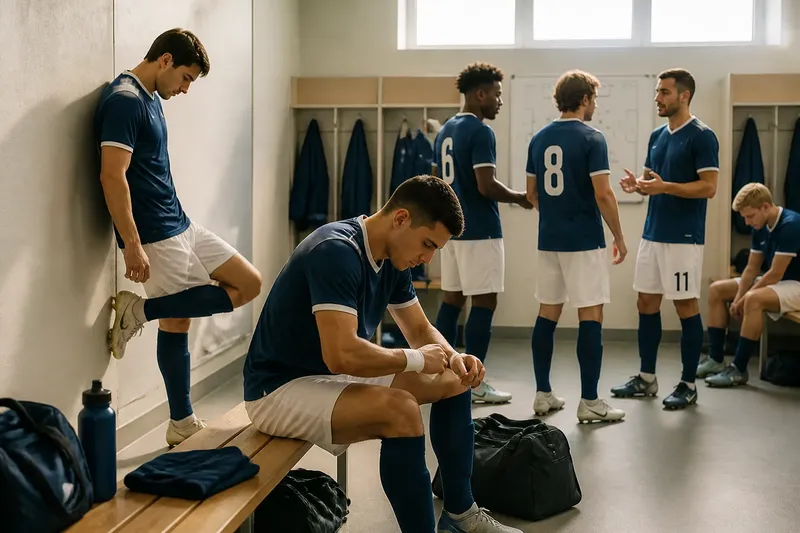
One player taps a boot against the tunnel wall while a teammate quietly reties a wristband; across the room, others talk about the lineup. These small scenes complicate the familiar image of a whole team performing the same pre-game ritual. A team pre-game ritual can be collective, personal, improvised, or nonexistent, and those differences say something about how a group makes room for belonging.
A team can share a custom without sharing every action
A shared ritual is a repeated action that members recognize as part of the team’s preparation or identity. It might be a huddle, a call-and-response, a song, or a moment of silence before players leave the locker room. The action matters, but so does its meaning: teammates understand that they are taking part in a group custom rather than merely happening to stand together.
Shared rituals make the group visible to itself. A huddle gives players a common point of attention; a familiar phrase can mark the transition from conversation to competition. The custom need not involve every person in exactly the same way. A player may join the circle without speaking, while another leads the words. Participation can still be shared when the roles differ.
The distinction is useful because the phrase “team ritual” can imply uniform behavior. In practice, a group may have one recognizable moment surrounded by varied private habits. Treating the shared part as the whole routine risks overlooking how individuals prepare—and can make a customary gesture sound like a rule.
Personal rituals give players room to prepare differently
A personal ritual belongs mainly to one player. It could be arranging equipment in a familiar order, listening to a particular kind of music, or taking a quiet moment before joining teammates. Repetition can help make preparation feel familiar, but a personal custom does not automatically become a team tradition just because others know about it.
Personal habits can coexist with collective ones. A basketball player might take a brief private moment before joining the team’s huddle. A runner might prefer quiet while teammates chat around them. These preferences do not necessarily signal distance from the group; they may simply reflect different ways of getting ready.
Respecting that difference is a practical part of team culture. When a player’s habit is harmless and does not disrupt a shared commitment, teammates can let it remain personal. If a group expects everyone to copy a private gesture, the custom can shift from a source of comfort into a test of loyalty. A ritual creates belonging most readily when participation is understood rather than coerced.
Improvised customs make space for a changing squad
Some traditions are neither long-standing nor formally planned. They emerge from a particular matchday: a teammate starts a chant, the group answers, and the exchange becomes familiar. Improvised customs can help a squad express its character because players shape them together instead of inheriting a fixed routine.
These customs are especially adaptable when a roster changes. New players may join a simple gesture or add a response of their own. The group can preserve a sense of continuity without asking everyone to recreate an old routine exactly. Like a shared table where each person brings a dish, the gathering can belong to the group even as its contributions vary.
Improvisation does not mean that every spontaneous act should be treated as tradition. A custom takes on that role when people recognize it, repeat it, and choose to carry it forward. Until then, it may be only a one-time expression of excitement. That distinction helps teams avoid turning a passing moment into an expectation before members have decided they want it to last.
When is a pre-game ritual shared, personal, or optional?
Does every player need to take part in a team ritual?
No. A group can hold a shared custom while allowing different roles, levels of participation, or quiet observation. The important distinction is whether the team treats the action as a common marker or demands that every person perform it identically.
Can a personal habit become a team tradition?
It can if teammates adopt it together and give it a shared meaning. Until that happens, it is more accurate to call it one player’s routine, even if it is familiar to the squad.
What if a player prefers no pre-game ritual?
That preference can be part of a team’s normal range. A player may prepare through individual habits, ordinary conversation, or quiet, without needing a special custom.
How can a team tell whether a custom is still welcome?
Notice whether members join willingly and whether the custom still fits the group. An open conversation can clarify whether people want to keep it, adapt it, or let it go.
Choose the approach that fits the group’s purpose
There is no single best form for every squad. A shared ritual may suit a group seeking a visible moment of unity. Personal customs may suit players who prepare in distinct ways. Improvised traditions may appeal to a team that wants customs to develop through participation rather than arrive as a ready-made package. Some groups may prefer no special routine at all.
To choose, start with what the team wants the custom to do. Is the aim to focus attention, welcome new teammates, express a shared identity, or simply mark a transition? Then ask who wants to participate and what forms of participation feel comfortable. A brief huddle and an individual moment of quiet can serve different purposes side by side, so a team need not force them into competition.
Say a newly formed soccer squad wants a small sign of connection before kickoff, but several players prefer quiet. The team could try a short, optional gathering near the sideline, with a spoken cue for anyone who wants to join and room for others to prepare privately. After a few matches, the players could talk about whether the moment feels useful and keep, change, or drop it. The observable result would be a custom the group has chosen, rather than a routine assumed to suit everyone.
For readers trying to identify a team pre-game ritual, look for both repetition and consent. A gesture repeated with shared recognition may be a tradition; a private habit may remain personal; an improvised moment may still be taking shape; and an absent routine may be an intentional choice. The most revealing question is not whether everyone does the same thing, but whether the team understands what its customs are for—and leaves room for people to prepare in their own way.